
Groundwork That Makes Septic Systems Viable
Septic Services in Newton for excavation, grading, and site preparation when septic installation depends on correct soil and drainage conditions
Rockett Grading & Land Management provides septic services in Newton, Morganton, Hickory and surrounding areas when your new construction or property development requires excavation and grading to support septic system installation. You need this service when building on land without public sewer access, when replacing a failing septic system, or when site conditions must be modified to meet drain field and tank placement requirements. The work involves digging to specified depths for tank installation, shaping drain field areas to ensure proper slope and drainage, and verifying that soil conditions allow the system to function as designed.
Septic preparation addresses the challenge of creating subsurface conditions that allow wastewater to percolate through soil at the correct rate. Drain fields require precise grading to distribute effluent evenly without pooling or runoff, and tank placement must account for access, depth, and connection points to the home. In areas around Newton where clay soils reduce percolation rates, site grading and fill material placement become critical to meeting health department approvals. Operators excavate trenches for distribution lines, shape the field to match engineered plans, and ensure compaction levels support long-term system performance.
Contact us for septic project planning and estimates to review your property layout, soil conditions, and grading requirements before installation begins.
How Septic Site Preparation Takes Shape
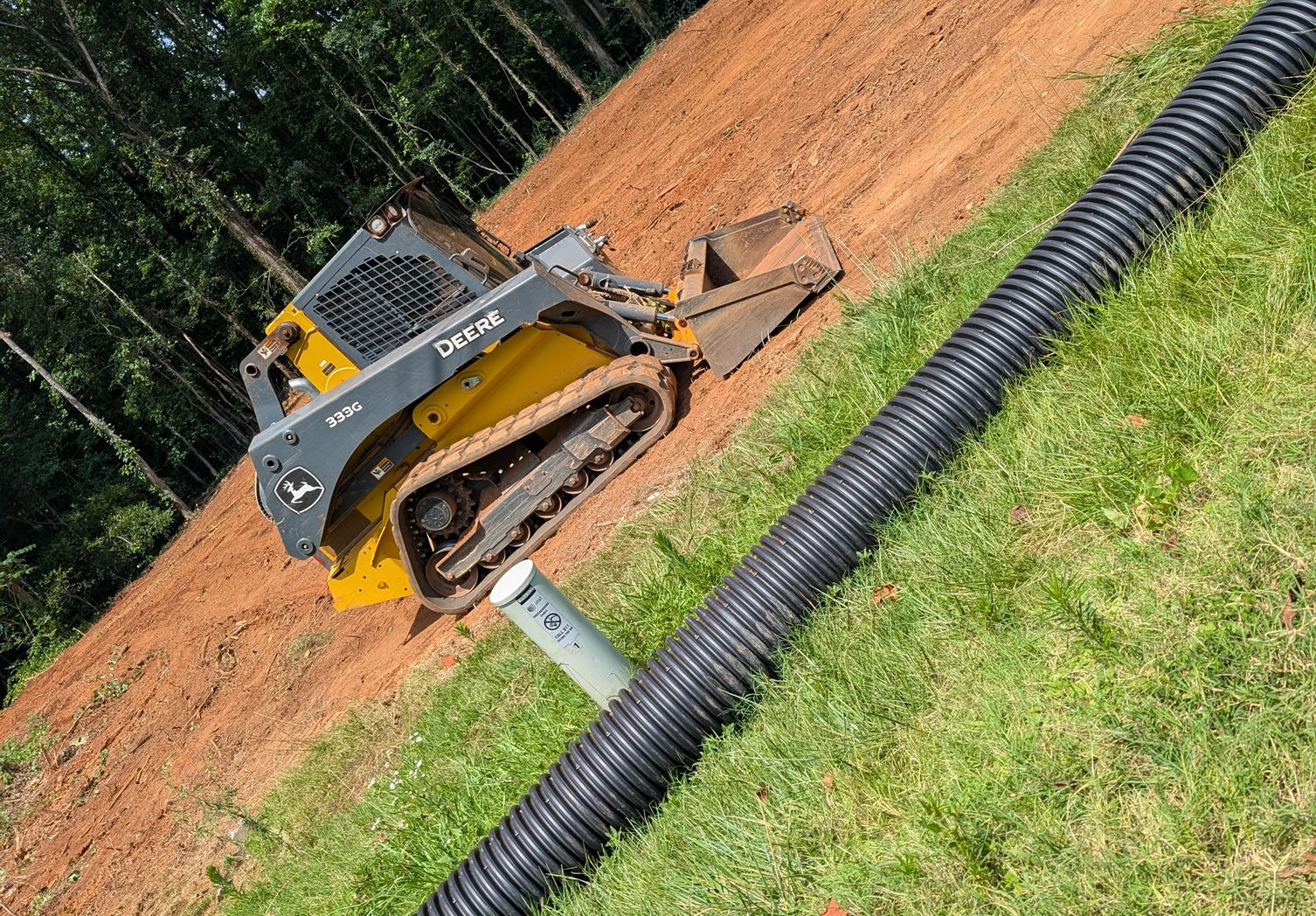
Your septic project begins with site evaluation and layout marking based on the approved septic design. Operators excavate the tank location to the depth and dimensions specified by the installer, ensuring stable sidewalls and a level base for the tank to rest on. Drain field trenches are dug to precise depths and slopes, typically ranging from one to three feet depending on soil type and system design. Excavated soil is stockpiled for backfill or removed if unsuitable for reuse, and clean gravel or approved fill is placed as specified by the septic plan.
After excavation and grading are complete, you will see a clearly defined area with tank and drain field locations ready for the septic installer to set tanks, run distribution lines, and connect plumbing. Rockett Grading & Land Management coordinates timing with your septic contractor to ensure the site is prepared when installation crews arrive, avoiding delays that occur when excavation and system placement are out of sequence.
Septic services include excavation, grading, and site shaping but do not cover tank installation, plumbing connections, or health department inspections. Those tasks are handled by licensed septic installers who work from the prepared site. If your property requires additional fill, drainage modifications, or access road grading to support equipment during installation, those elements are coordinated as part of the broader site development effort rather than standalone septic work.
Common Questions About Septic Site Work
Septic projects raise practical questions about soil conditions, grading requirements, and how site work fits into the installation timeline. Here are answers to help you understand what preparation your property needs.
What determines where the septic system can be placed on a property?
Setback requirements from wells, property lines, and water bodies dictate placement, along with soil percolation rates and slope. Your septic designer evaluates these factors and creates a layout that meets local health department standards for Newton and Catawba County.
How deep does excavation need to go for a septic tank?
Most residential septic tanks are installed with tops at or slightly below finished grade, requiring excavation depths of four to six feet depending on tank size and inlet pipe elevation. Drain field trenches are typically shallower, ranging from one to three feet.
Why does soil type matter for septic system performance?
Soil percolation rate determines how quickly wastewater moves through the drain field. Clay soils slow percolation and may require engineered fill or alternative system designs, while sandy soils drain faster and support conventional systems more easily.
What happens if the site does not have enough slope for gravity drainage?
When natural slope is insufficient, the drain field area is built up with graded fill to create the necessary elevation difference. Pumped systems are used when gravity flow cannot be achieved, but site grading still ensures proper distribution once effluent reaches the field.
How long does septic site preparation take before installation begins?
Excavation and grading for a typical residential septic system usually take one to two days depending on soil conditions, access, and the size of the drain field. Larger systems or sites requiring significant fill placement take longer.
If your new build or property development includes septic system installation, reach out to Rockett Grading & Land Management to coordinate excavation, grading, and site preparation that aligns with your septic design and construction schedule.