Controlled Removal That Clears the Way
Demolition in Newton for tearing down structures, clearing debris, and preparing properties when redevelopment begins
Rockett Grading & Land Management handles demolition projects in Newton, Hickory, Denver, and surrounding areas when you need a structure removed, a property cleared, or a site prepared for new construction. You need this service when an old building must come down before redevelopment, when storm-damaged structures pose safety risks, or when clearing unwanted outbuildings makes room for expansion. The work involves tearing down walls, removing roofing and framing, hauling debris, and leaving a clean, graded surface ready for the next phase of work.
Demolition addresses the challenge of safely dismantling structures without damaging adjacent property or creating hazards. Operators use excavators with hydraulic attachments, skid steers, and manual labor to pull down framing, separate materials, and load debris for disposal. The sequence of removal matters—roofing and siding come off first, followed by framing and foundation elements. In residential tear-downs around Newton, older homes often contain mixed materials that require sorting for proper disposal, including treated lumber, metal roofing, and concrete block foundations.
Contact us for demolition assessments and project quotes to review the scope of removal and site cleanup your property requires.
What Happens During a Demolition Project
Your demolition project begins with utility disconnection to ensure no active electrical, gas, or water lines remain in the structure. Operators start at the roof and work downward, using excavator arms to pull sections apart in a controlled manner. Debris is sorted as it comes down—metal is separated for scrap, wood is loaded for disposal, and concrete is either crushed on-site or hauled to a recycling facility. Hydraulic shears and grapple attachments allow operators to grip and tear framing members without scattering material across the property.
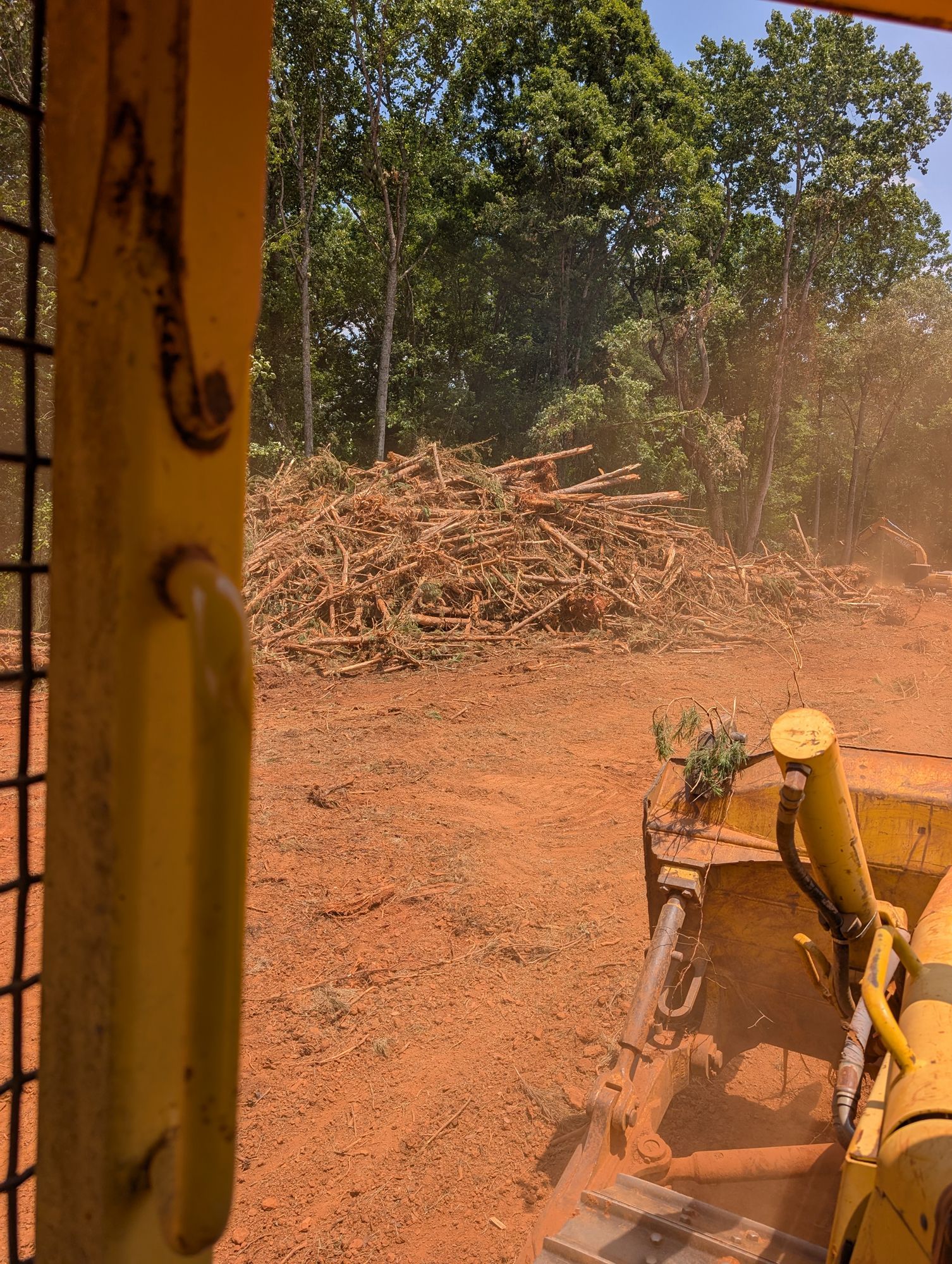
After the structure is removed, you will see a cleared lot with graded soil where the building once stood. Foundation slabs or footers are broken up and removed, and the site is leveled to match surrounding grade. Rockett Grading & Land Management coordinates debris hauling and site cleanup as part of the demolition process, so you do not have piles of rubble sitting on the property after the tear-down is finished.
Demolition services include structure removal, debris hauling, and basic site grading but do not cover utility disconnection, environmental remediation, or hazardous material abatement. If your building contains asbestos, lead paint, or underground storage tanks, those items require specialized handling before demolition begins. Access for heavy equipment must be confirmed in advance, and neighboring properties are protected with barriers or dust control measures when work occurs in tight residential settings.
Questions About Demolition and Site Clearing
Demolition projects bring up questions about safety, timing, and what gets left behind. Here are answers to help you understand how the work proceeds and what your property will look like afterward.
What determines how long a demolition project takes?
The size of the structure, the materials involved, and site access all affect demolition duration. A single-story residential home typically takes one to three days, while larger commercial buildings or properties with extensive foundations require more time.
How is debris handled after the building comes down?
Debris is sorted, loaded into trucks, and hauled to disposal or recycling facilities. Metal is separated for scrap value, and concrete may be crushed for reuse. Wood framing and mixed materials go to landfills unless local recycling options exist.
Why does demolition sometimes require more than one piece of equipment?
Different tasks demand different machines—excavators with shear or grapple attachments handle structural tear-down, while skid steers move debris and grade the site. In Newton, tight lots or limited access may require compact equipment that can maneuver without damaging adjacent property.
What happens to the foundation after a building is torn down?
Concrete slabs and footers are broken into smaller pieces with hydraulic breakers, then removed and hauled off-site. The area is backfilled and graded to match the surrounding elevation, leaving a level surface for future construction.
How are neighboring properties protected during demolition work?
Operators use barriers, tarps, and dust suppression methods to contain debris and minimize airborne particles. Equipment is positioned to direct falling material away from adjacent structures, and work is scheduled to reduce disruption to nearby residents.
If you are planning a tear-down, clearing a property for redevelopment, or removing a structure that no longer serves your needs, reach out to Rockett Grading & Land Management to schedule an assessment and review the scope of removal and cleanup required.