Precision Digging That Keeps Projects Moving
Excavation in Newton for building foundations, utility trenches, and site work when accuracy determines project success
Rockett Grading & Land Management provides excavation services in Newton, Charlotte, Statesville and surrounding areas when your residential or commercial project requires accurate digging, trenching, and earthmoving. You need this service when preparing a building foundation, installing underground utilities, or clearing material for site development. The work involves removing soil and rock to specified depths and grades, creating the subsurface conditions that support everything built above ground.
Excavation addresses the challenge of shaping raw land to meet engineering plans. Whether you are digging a basement footer, routing a water line, or creating access for drainage infrastructure, the depth, width, and slope of each cut must align with design requirements. Mistakes in excavation create costly delays and require rework that affects your construction timeline. In areas around Newton where soil composition varies between clay-heavy and mixed substrates, operators adjust equipment and technique to maintain trench stability and avoid collapse during the dig.
Reach out to discuss your excavation requirements and review the scope of digging, grading, or trenching your project demands.
How Excavation Work Unfolds on Your Site
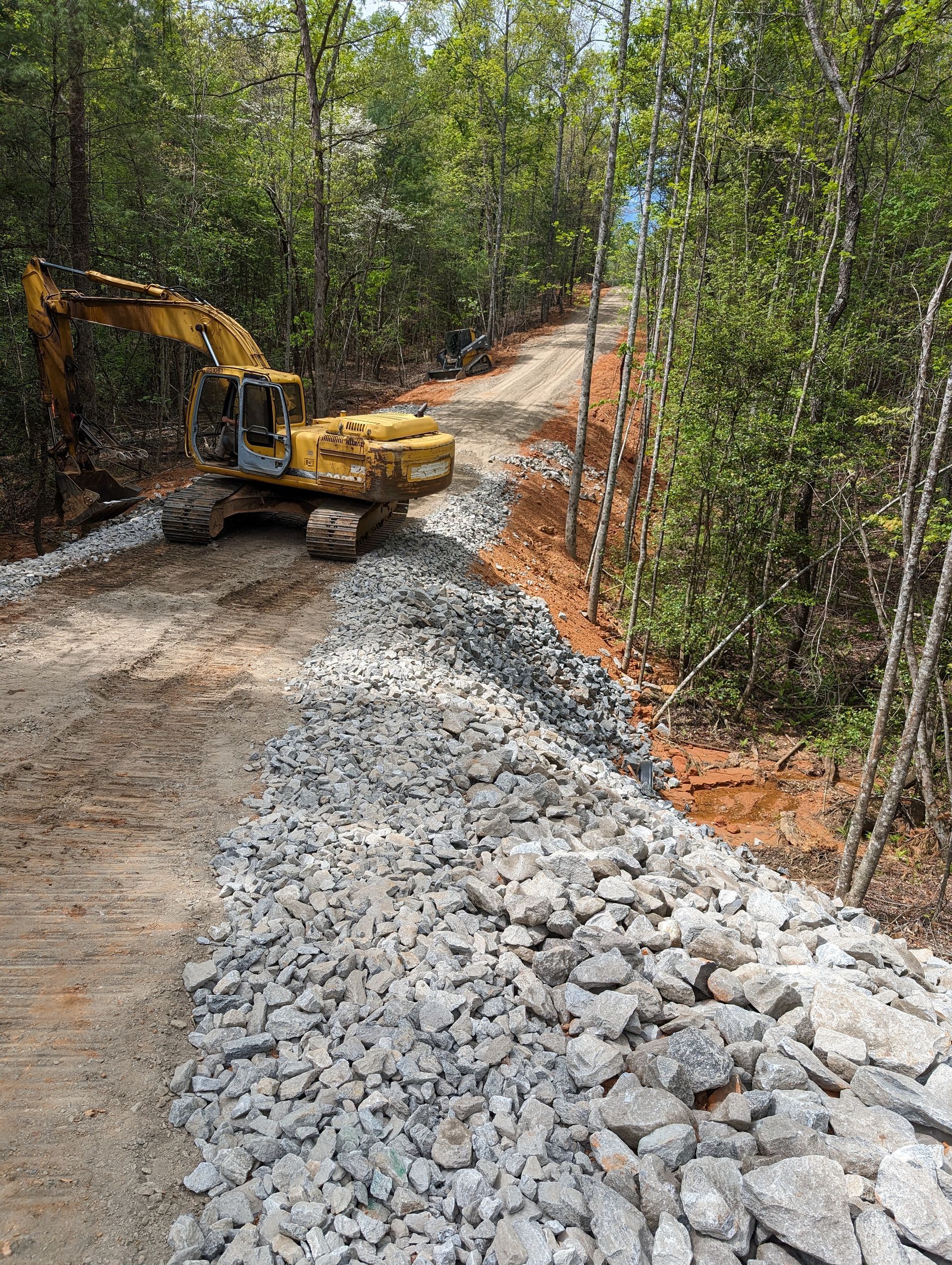
Your excavation begins with site marking and utility location to prevent damage to existing lines. Operators use hydraulic excavators, backhoes, and compact machines depending on the scale and access constraints of your property. Bucket selection changes based on whether the task involves digging narrow utility trenches, removing large volumes of soil for a foundation, or shaping slopes for drainage. Depths are verified with laser levels or GPS grading systems to ensure compliance with plan specifications.
After excavation is complete, you will see clean, straight cuts that match the dimensions on your site plan. Soil removed during the dig is either stockpiled on-site for backfill or hauled away if unsuitable for reuse. Trenches remain stable and ready for pipe installation, footer forms, or utility work. Rockett Grading & Land Management coordinates excavation timing with other trades to keep your project sequence on track and avoid unnecessary site disturbance.
Excavation services include earthmoving and trenching but do not cover utility installation, concrete placement, or material delivery. If your project involves complex grading or site preparation beyond the excavation itself, those elements are handled through integrated site work rather than as standalone excavation tasks. Equipment access must be confirmed before work begins, especially on properties with narrow driveways or overhead obstructions that limit machine maneuverability.
Common Questions About Excavation Work
Excavation projects bring up practical questions about timing, equipment, and site conditions. Here are answers to help you understand what the work involves and how it fits into your construction schedule.
What determines how deep excavation needs to go?
Your building plans and local frost line requirements set the minimum depth for footers and foundations, while utility trenches follow code specifications for pipe burial and slope. Soil conditions may require deeper digging if unsuitable material must be removed and replaced with compacted fill.
How long does excavation take for a typical residential foundation?
A standard residential foundation excavation typically takes one to two days depending on soil conditions, site access, and the size of the footprint. Larger commercial projects or sites with rock require additional time and may involve different equipment.
Why does excavation sometimes expose groundwater or standing water?
Digging below the water table or into saturated soil brings water into the excavation. You may need dewatering pumps or drainage measures to keep the work area dry enough for footer placement or utility installation.
What happens to the soil removed during excavation?
Excavated soil is stockpiled on-site if it will be used for backfill after construction, or hauled off if the material is unsuitable or excess. In Newton, clay-heavy soils are often reused for grading work if they meet compaction standards.
How is trench safety maintained during excavation?
Operators use sloped walls, trench boxes, or shoring systems to prevent collapse when workers enter the excavation. OSHA standards require protective measures for any trench deeper than five feet, and soil type influences the method used.
If your project involves foundation prep, utility routing, or site clearing that requires controlled digging, contact Rockett Grading & Land Management to review your excavation scope and coordinate the work with your construction timeline.